


Travertine Tables: Natural Stone in Project Interiors

Travertine tables can introduce natural colour variation and surface texture to dining and seating areas. Coffee tables and dining tables have different requirements. Assess scale, support and use conditions alongside the visual direction of the room.
Select the shape for the layout
A round top can create a group in which seats face one another. A rectangular table may suit some elongated spaces. In both cases, review top dimensions, base position and usable seating capacity together.
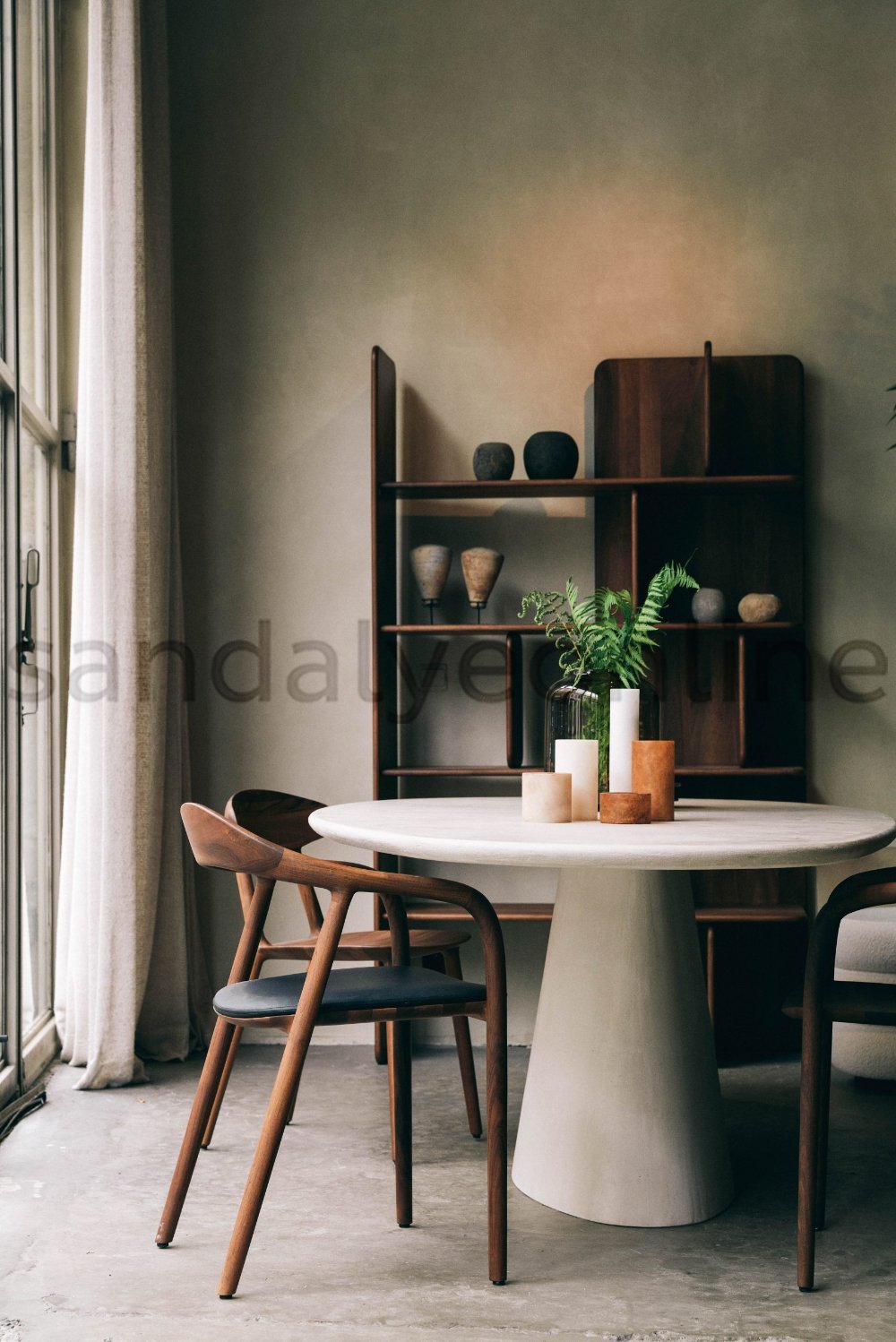
Approve stone samples and surface finishes
Travertine can show variation in veining, pores and tone. Filled surfaces and different finishes will not have an identical appearance. Discuss the variation range represented by the approved sample; a photograph should not be the final colour reference.
Review the top and supporting structure
A stone top may combine with another base material or a stone-clad structure. Clarify construction, joints, total weight and the delivery route. Any replacement of an existing table base requires an assessment of structural compatibility.
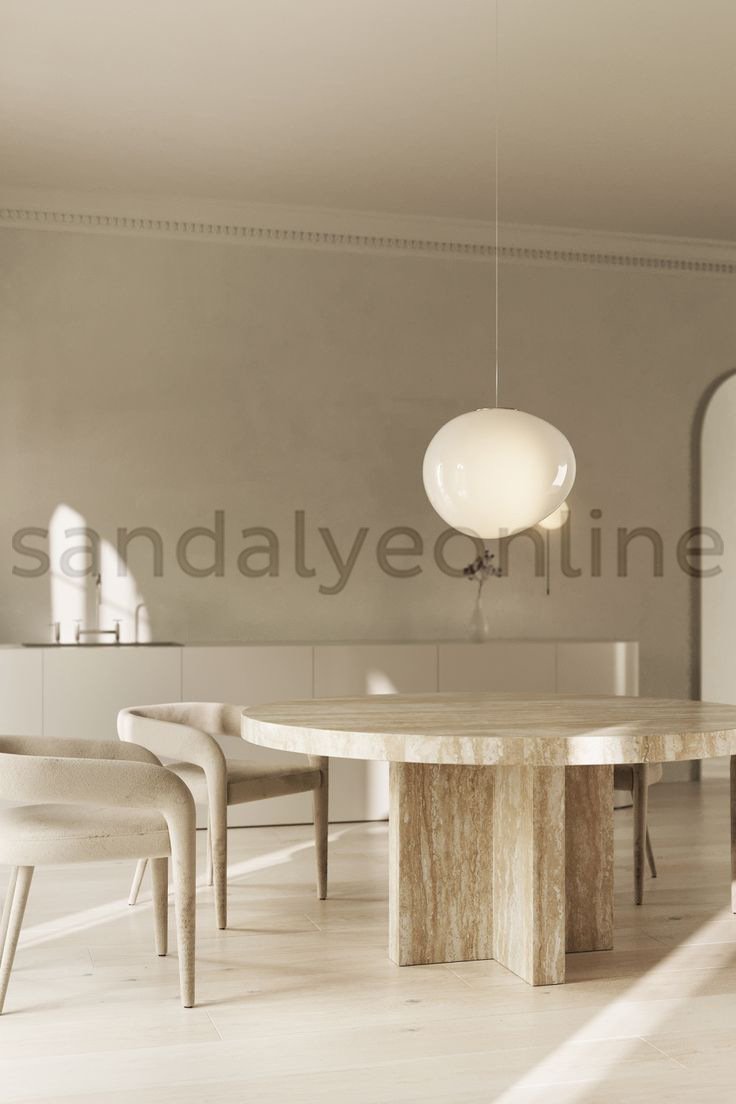
Coordinate colours through samples
Beige stone can work with timber, lighter upholstery, green or darker details. Rather than ruling out colours such as grey or pink, compare the actual samples under the intended lighting. Assess chair dimensions and upholstery alongside the table.
Understand care and use conditions
Travertine is not automatically more durable or stain-resistant than marble. The Natural Stone Institute notes its vulnerability to mild acids. Follow guidance for the selected product on cleaning and outdoor suitability.
Define the project through a finish file
Consider coffee tables and dining tables within one coordinated palette. Sandalyeonline is a Turkey-based international B2B contract and hospitality furniture manufacturer. Share dimensions, quantities and material requirements with our export team.