


Restaurant Chair Selection: Connecting Personal Taste with the Brand Concept

Personal taste is a useful starting point for restaurant chair selection, but the decision becomes clearer when connected to the whole venue. Menu, service style, lighting and table arrangements contribute to the same experience. Assess restaurant seating options through their contribution to that concept, as well as their appeal in a photograph.
For a hotel restaurant or an independent dining venue, compare the chair, table, upholstery and finishes as one restaurant furniture scheme before confirming individual models.
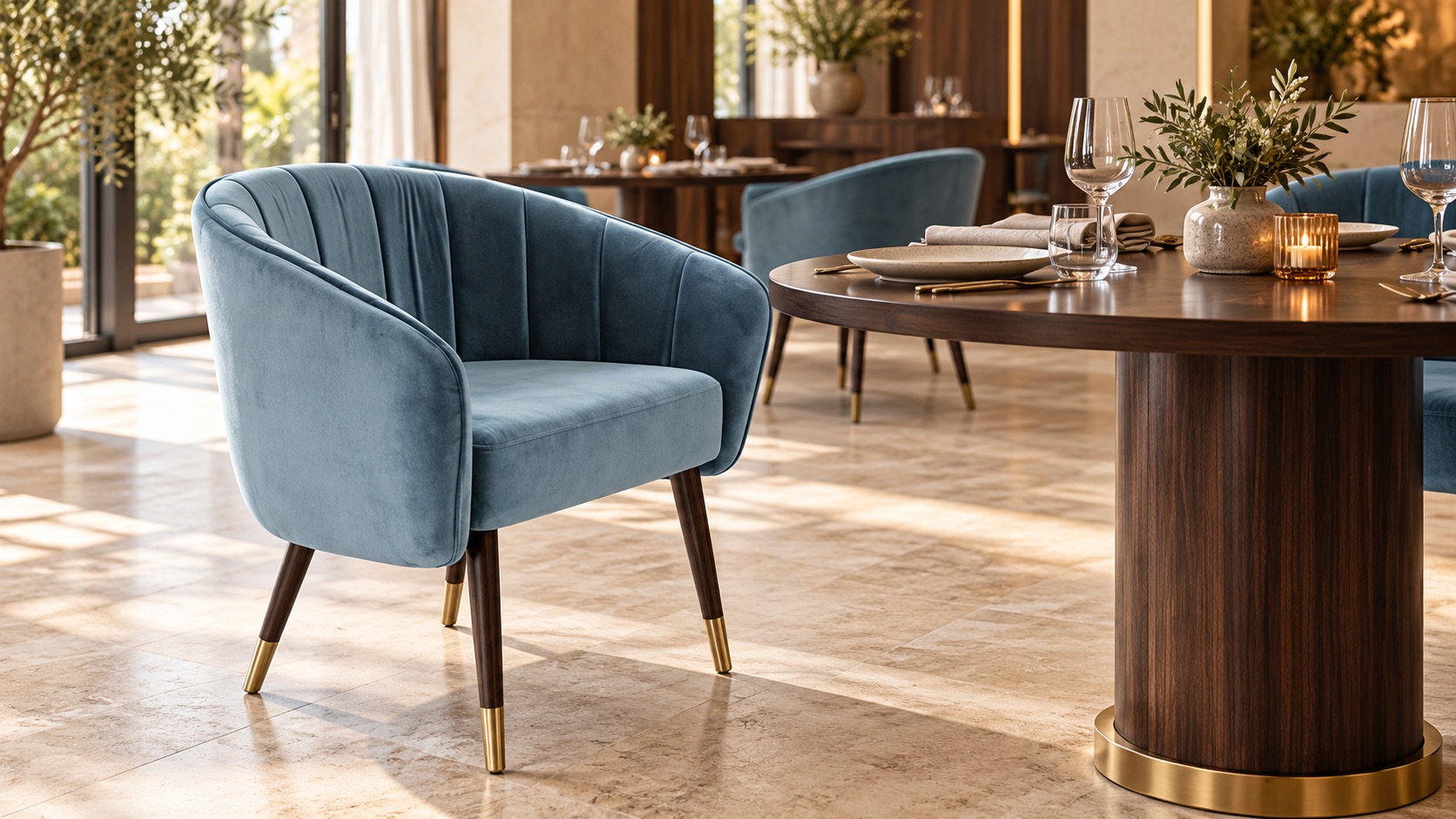
Describe the direction in a few clear words
You might choose warm and restrained, graphic and lively, or more formal and quiet. These are working descriptions for the project rather than strict style categories. When a chair is proposed, explain which feature supports the chosen direction.
Where several people share the decision, use the same reference board. Concrete examples of fabric, colour and form are easier to discuss than broad labels such as luxury or modern alone.
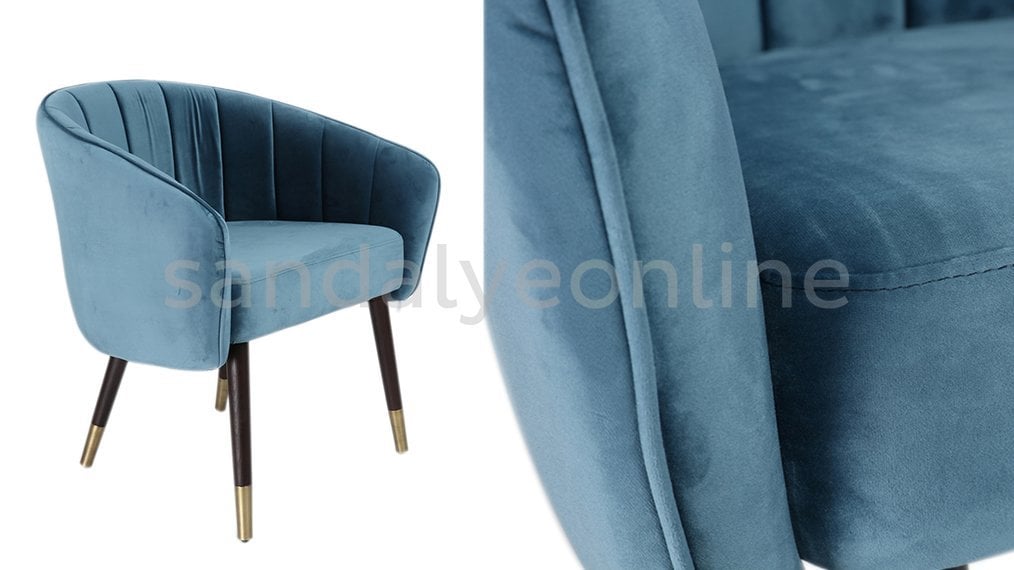
Give the table and chair clear roles
A tabletop with strong grain or a pronounced edge can pair with quieter seating. A simpler surface can give more emphasis to a distinctive chair back. Treat restaurant tables as equal parts of the composition.
The bar, main dining room and a private area may use different furniture. A common metal finish or upholstery tone can connect them without requiring identical models throughout.
Build the palette from physical samples
Review timber, fabric and metal samples together under the same light. Seeing how colours that appear close on a screen differ on real surfaces can clarify the selection. Consider where textures support one another and where too many competing features appear.
If an accent colour is chosen, show where and how often it repeats. Giving every chair equal visual emphasis is only one possible approach, rather than a requirement.
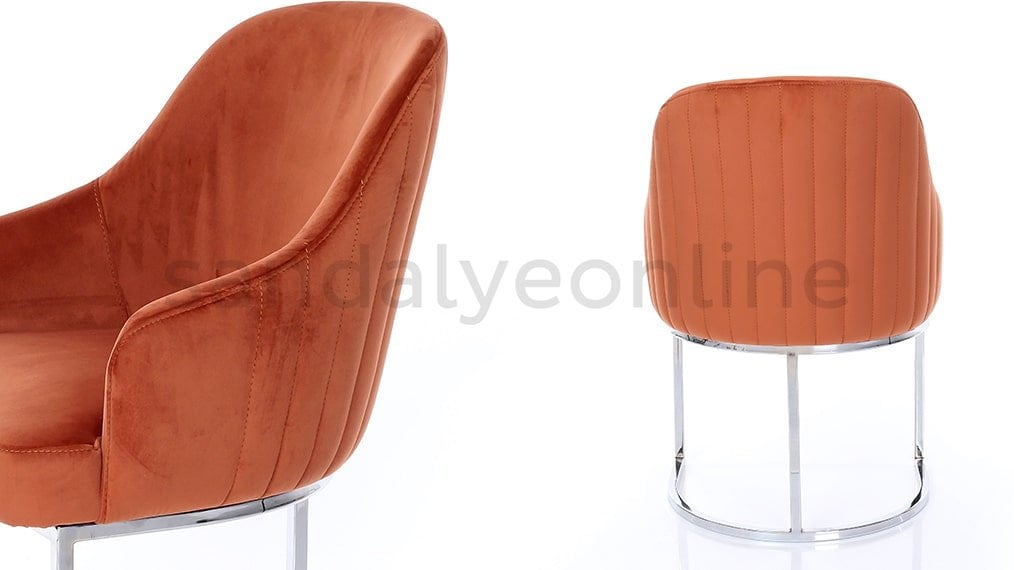
Test visual choices through a service scenario
View the preferred model within the actual table arrangement. Consider what changes when guests sit down, service takes place and the table is reset. A sample setting can make the relationship between preference and operating needs easier to assess.

Carry the approved concept into the order
Bring product codes, sample references and intended zones into one furniture schedule. Record the choices consistently so the concept remains clear during ordering.
Sandalyeonline is a Turkey-based B2B contract and hospitality furniture manufacturer. Share your concept board, table layout and quantities with our export team for an international restaurant project.
